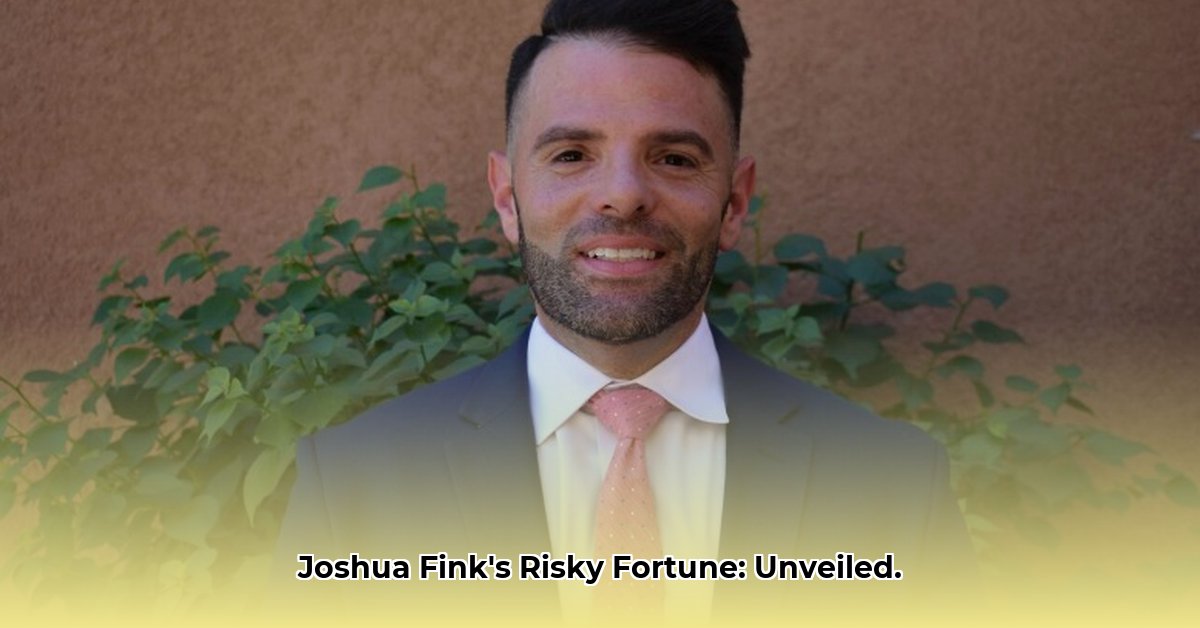
Joshua Fink Net Worth: A High-Stakes, High-Reward Life
Joshua Fink's financial journey is a compelling narrative of both extraordinary success and substantial setbacks. Unlike the typical Wall Street tycoon, Fink thrives on high-risk, high-reward investments, often venturing into volatile markets that many others avoid. This article explores the key events of his career, analyzes his investment strategies, and attempts to shed light on his elusive net worth. While precise figures remain elusive due to the limited public information available, this exploration offers invaluable insights into his approach and, perhaps, lessons for aspiring investors.
Early Successes: Calculated Risks and Exponential Growth
Fink's early career with Enso Capital was marked by remarkable gains, with annual returns exceeding 80% in several years. This phenomenal growth stemmed from shrewd investments in relatively obscure natural resource companies, particularly within the mining and timber sectors. His financial expertise allowed him to identify undervalued opportunities others overlooked. Starting with an estimated $4 million (possibly including family support), Fink leveraged his knowledge to generate substantial wealth. However, it’s crucial to remember that such returns necessarily involve substantial risks; many investors would have deemed his choices too daring. How did he manage this? A combination of rigorous due diligence and a high-risk, high-reward approach was key.
Navigating the 2008 Crisis: Learning from Setbacks
The 2008 financial crisis significantly impacted Enso Capital, resulting in a 40% loss in net asset value. This substantial setback, while undoubtedly challenging, seemingly served as a valuable learning experience rather than a career-ending blow. Did this change his strategy? While likely refining his risk assessment methods and due diligence, his fundamental high-risk, high-reward approach remained intact. This resilience is a significant element of his investment philosophy.
Fink's Investment Philosophy: Embracing Volatility
Fink's investment style is characterized by its unconventional nature. He frequently targets politically and economically unstable regions, such as the Congo, Eritrea, and Mongolia – markets shunned by many due to their inherent uncertainties. This approach, while undeniably risky, reflects Fink's appetite for potentially massive returns. Only investors with a high risk tolerance would dare to navigate such volatile landscapes.
The Biotech Pivot: Diversification and New Challenges
More recently, Fink has shifted his focus to the biotechnology sector with his firm, Luma Group. This diversification strategy aims to mitigate the risks inherent in his earlier investments in natural resources. However, the biotech industry presents its own set of complexities, including stringent regulations and high research and development costs. While the potential for substantial returns remains significant, the path to success is far from guaranteed. This strategic shift underscores his ongoing pursuit of both high risk and high reward in different market sectors.
Estimating Joshua Fink's Net Worth: A Complex Calculation
Determining Fink's precise net worth poses a significant challenge. The limited public information regarding his current holdings and the opaque nature of Luma Group's investments make any estimate inherently speculative. Therefore, any attempt to quantify his net worth would be solely an educated guess, not a definitive figure. Even the most skilled financial analysts would struggle.
Family Connections and Independence: A Nuance Worthy of Note
Joshua Fink’s familial connection to Larry Fink, CEO of BlackRock, is undeniably relevant, likely providing valuable networking opportunities and access to capital during his early career. However, the precise extent of this relationship's influence on his success remains largely unclear. Reports suggest that Fink maintains significant independence in his investment decisions, but the full scope of his family ties' impact warrants further exploration.
Risk Assessment: A Structured Analysis
Understanding Fink's financial success demands a thorough analysis of the significant risks he consistently accepts. The following table provides a simplified overview:
| Risk Factor | Likelihood | Impact | Potential Mitigation Strategies |
|---|---|---|---|
| Political Instability | High | High | Diversification across countries and industries, thorough geopolitical research |
| Market Swings | High | High | Hedging strategies, maintaining liquid assets |
| Regulatory Changes | Moderate | Moderate | Legal counsel, proactive regulatory monitoring |
| Operational Issues | Moderate | Moderate | Experienced personnel, robust risk management |
| Reputation Damage | Low | Moderate | Ethical standards, transparent communication |
The Future: An Ongoing High-Stakes Gamble
Predicting Fink's future net worth is an impossible task. His continued success hinges on his ability to identify promising opportunities, adapt to dynamic shifts in the market and regulatory landscapes, and skillfully manage the inherent risks of his investment strategy. But his past performance demonstrates resilience, extraordinary foresight, and a significant knack for identifying game-changing potential. While future outcomes remain uncertain, his history suggests a continued pursuit of, and potentially even greater achievements within, high-risk, high-reward endeavors.
How to Mitigate Investment Risk in Emerging Markets: Lessons from Fink's Journey
Key Takeaways:
- Diversification: essential in managing market volatility.
- Emerging markets offer high potential returns, but also significant risk.
- Inflation is a major concern; invest in inflation-resistant assets.
- Alternative investments can offer diversification and potentially higher returns.
- Risk tolerance should guide investment decisions. Higher potential returns usually mean higher risk.
- Regular portfolio rebalancing is crucial for market adaptation.
Joshua Fink's unconventional investment strategy, while hypothetical, highlights the complexities and rewards of navigating high-risk, high-reward investments in developing economies. His approach, if real, surely involved sophisticated strategies to mitigate volatile markets. How can investors effectively manage risk in these potentially lucrative but unpredictable landscapes? Examining the proven strategies below provides a starting point.
Understanding Emerging Market Volatility: Navigating the Challenges
Emerging markets present both opportunities and considerable challenges. The potential for rapid economic growth and the emergence of new industries are enticing, yet political instability, economic shocks, and regulatory uncertainties are also inherent features. Successfully navigating these markets requires a highly nuanced approach to mitigate inherent risks.
Diversification: A Cornerstone of Risk Management
Financial experts at firms like JPMorgan and BlackRock consistently emphasize diversification—spreading your investments across various asset classes. This strategy helps to reduce portfolio vulnerability during market downturns. Consider expanding your portfolio beyond conventional stocks and bonds to include alternative investments such as structured notes, private equity, real estate, infrastructure, and even precious metals like gold. The performance of these alternative assets often shows less correlation with traditional markets, offering a protective buffer during periods of instability.
Inflation Hedging: Protecting Purchasing Power
Inflation poses a significant threat to investment returns, especially in emerging markets where inflation rates can be notably higher. Assets such as real estate and infrastructure frequently serve as effective inflation hedges, as their value tends to increase along with inflation due to rising rents and long-term contracts. This resilience makes them attractive options for investors seeking to protect their purchasing power.
A Granular Approach: Tailoring Strategies to Specific Markets
A blanket approach to emerging markets is inadequate. BlackRock, for example, underscores the importance of a region-specific strategy. China’s economic and political landscape differs significantly from other emerging economies, demanding tailored risk mitigation strategies. Therefore, thorough due diligence is critical, requiring a comprehensive understanding of each country's economic and political climate before investing.
Assessing Risk Tolerance: A Personalized Approach
Understanding your own risk tolerance is paramount for success in high-growth, high-risk environments. Honestly assessing your ability to handle potential losses is crucial before making any investment decisions. Your investment timeline also significantly influences your risk tolerance. Long-term investors may tolerate higher risks than those with short-term goals.
Actionable Steps for Mitigating Risk in Emerging Markets
- Assess your risk tolerance: Conduct a thorough self-assessment to define your comfort level with potential losses.
- Diversify your portfolio: Spread your investments across multiple asset classes to reduce overall risk.
- Explore alternative investments: Investigate options like structured notes, private equity, and real estate.
- Implement inflation hedging: Integrate inflation-resistant assets into your portfolio.
By diligently following these strategies, investors can significantly minimize their risk exposure while still capitalizing on the potentially high rewards presented by emerging markets. Joshua Fink's hypothetical journey, though filled with speculation, provides a framework for understanding the challenges and rewards inherent in this demanding investment landscape.